
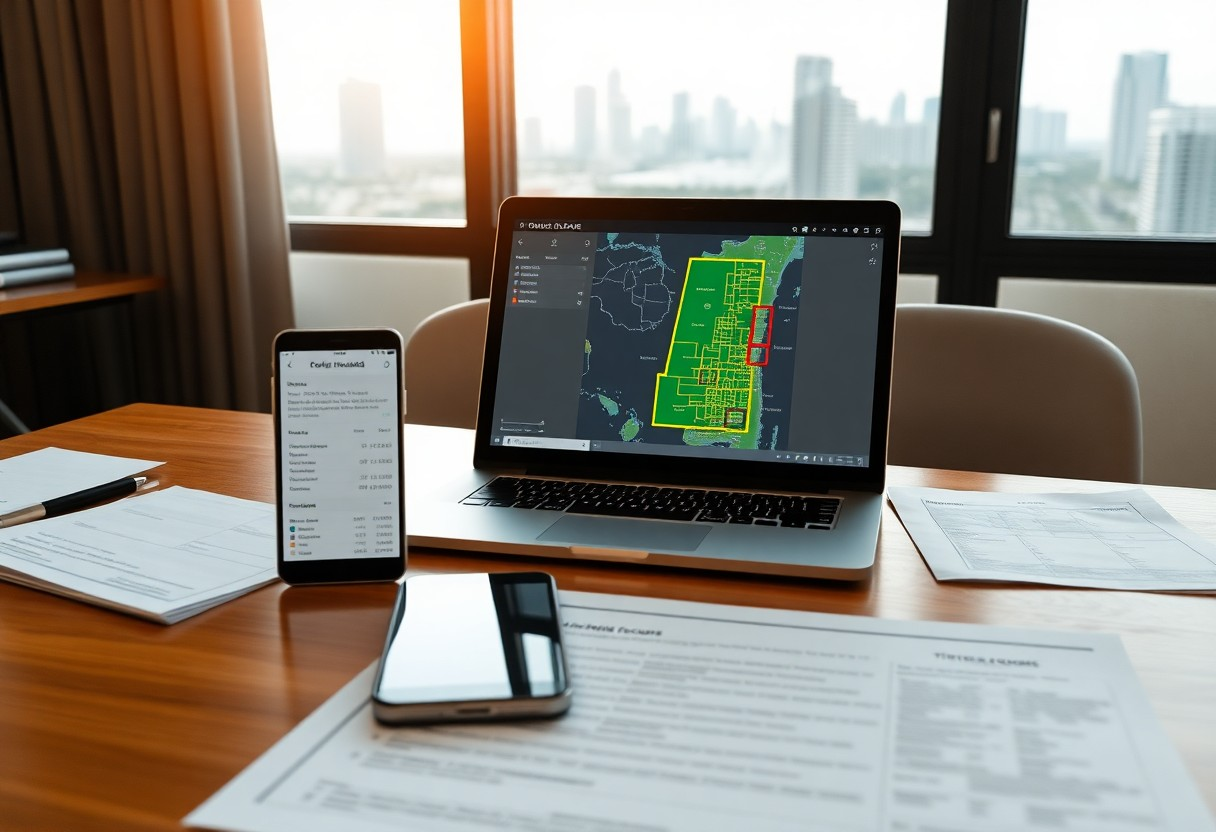
Miami property information is accessible when you know where to look and what to prepare: you should gather the address or folio number, use the Miami-Dade Property Appraiser and county GIS mapping portals, enter your query, apply filters for ownership or zoning, download or print reports, and verify details with official records or the county office if needed.
Understanding Miami Parcel Data
What is Parcel Data?
You pull together ownership details, the unique folio or parcel ID used by the Miami‑Dade Property Appraiser, legal description, lot acreage, building square footage, year built, assessed and market values, exemption status, and the parcel’s GIS layers (flood zone, tax district, zoning). Public records also show recent sales, deed recording dates, and tax roll entries so you can match documentation to the physical property.
Importance of Accessing Parcel Data
You use parcel data to validate ownership, calculate annual taxes, and run comparables when pricing or valuing property; the tax roll updates annually and sales histories often cover the last 5-10 years, which helps spot trends. For permitting or redevelopment you’ll check zoning codes and lot dimensions to verify what you can build or convert.
For example, when preparing an offer you might compare the parcel’s last sale price, assessed value, and exemptions-say a 7,500 sq ft lot with a 2,200 sq ft building sold in 2018 for $450,000 and now has an assessed value of $600,000-to evaluate market movement, potential tax liability, and negotiation strategy before due diligence or escrow.
Tools and Resources for Accessing Parcel Data
You can rely on Miami-Dade’s core tools to retrieve accurate parcel details: the Property Appraiser search by folio or address returns ownership, assessed and market values, and sales history; the County GIS Viewer shows parcel boundaries, zoning layers, flood zones and building footprints; the Tax Collector and Permitting portals supply tax bills and permit records linked to the same folio.
Official Miami-Dade County Websites
Start with the Property Appraiser and GIS Viewer for authoritative data: the Property Appraiser lists ownership, exemptions and assessed values, while the GIS Viewer overlays zoning, floodplain and parcel geometry for spatial context. Use the Tax Collector to confirm current tax balances and the Permitting/Building portals to track permits and inspections tied to the parcel.
Third-Party Data Aggregators
Consider aggregators such as ATTOM, CoreLogic, DataTree, PropertyShark, Zillow and Realtor.com when you need normalized datasets, bulk exports, or API access; they consolidate parcel boundaries, ownership, sales history and encumbrances across counties and often provide CSV downloads, map tiles, and analytics tools for market-level research.
Expect trade-offs: aggregators clean and link records from many sources, which speeds analysis but can lag behind county updates; you’ll find free single searches but pay for bulk downloads or API keys, with pricing from per-record fees to enterprise subscriptions. For example, you might pull 2,500 Miami parcels from an aggregator to run valuation models, then verify outliers directly on the Property Appraiser site.
Step-by-Step Guide to Access Miami Parcel Records
| Overview |
You begin at the Miami‑Dade Property Appraiser or County GIS portal, enter the 12‑digit folio, address, or owner name, inspect parcel boundaries and assessed values, then export results as CSV/shapefile or note folio numbers for formal requests; targeting a single parcel takes minutes, bulk pulls may require a records request. |
Navigating Online Portals
You use the Property Appraiser search and the County GIS map to pull parcel boundaries, zoning, and tax districts; search by address, owner name, or 12‑digit folio, toggle layers like flood zones and land use, and export point data or attribute tables-many portals let you download CSVs or request shapefiles for specific municipalities.
Requesting Data from County Offices
You submit a public records request to the Property Appraiser or Clerk’s office when you need bulk data, certified copies, or historical documents; include folio ranges, preferred file format, and delivery method, expect fees and a typical turnaround of 3-10 business days depending on volume.
You should format requests with a clear list of folio numbers or a spatial extent (e.g., all parcels in zip code 33130), specify CSV, shapefile, or PDF, and state if you need tax or deed histories. County staff often charge per hour for extraction on large jobs; providing a sample file and deadline (one to two weeks for ~10,000 parcels) speeds fulfillment and reduces back‑and‑forth.
Analyzing Parcel Data
You should cross‑check assessed value, last sale price, lot size (sq ft) and zoning to spot discrepancies and opportunities; for example, a parcel assessed at $250,000 but sold last year for $400,000 signals market premium or recent improvements. Also check FEMA flood zone (AE/VE), year built, and recent permit history to gauge redevelopment potential. Use folio ID to pull layered GIS maps and overlay recent comparable sales within 0.5 miles to validate valuation assumptions.
Key Metrics to Consider
Focus on last sale date/price, assessed land vs improvement values, lot area, building square footage, year built, bedrooms/baths, zoning designation, and FEMA flood zone. Prioritize comparables: 3-5 sales within 0.25-0.5 miles and six months for hot markets. Add indicators like permit activity and recorded easements; these often explain value gaps between assessed and market prices and affect renovation cost estimates.
Using Data for Real Estate Decisions
Use parcel data to model returns: if you consider buying for $350,000 with projected rent $2,500/month, annual gross is $30,000 and gross yield ≈8.6%; subtract taxes, insurance, and 30% vacancy/expense to estimate NOI. Cross‑verify zoning for allowed uses and check recent permit histories to avoid surprise costs from code violations or required upgrades.
When doing due diligence, pull title records, tax liens, and recorded easements tied to the folio; then run a comparable analysis using properties with matching lot size and year built to adjust for condition. If redevelopment is in play, confirm maximum FAR and setback rules from county zoning maps and estimate demolition/permit timelines-these factors can change feasibility and IRR projections significantly.
Common Challenges in Accessing Parcel Data
Data Accuracy and Currency
Expect discrepancies among the Miami-Dade Property Appraiser site, the county GIS viewer, and recorded deeds: parcels use folio numbers, yet owner names, acreage, and lot lines can lag after sales, subdivisions, or plat recordings. You should cross-check the Clerk’s Official Records for the recorded deed, compare recent aerial imagery, and verify assessed values before using parcel attributes for permitting, appraisals, or title checks.
Navigating Bureaucratic Processes
You’ll often need to work across multiple offices-Property Appraiser for assessments, Clerk of Courts for recorded deeds, and Building/Permitting for improvement records. Florida’s Chapter 119 governs public records requests, so be prepared to cite it, pay standard copying or processing fees, or visit an archive in person when older plats or microfiche aren’t online.
Begin by locating the parcel’s folio number in the GIS viewer, then use that folio when searching the Clerk’s Official Records for deed book/page or recorded plat references. If online searches fail, submit a formal public-records request to the relevant department and ask for specific formats (PDF for deeds, shapefile or CAD for boundary data). Contact county GIS staff for dataset metadata or bulk exports; they can often provide parcel shapefiles, update schedules, and guidance on converting coordinate systems for GIS use.
Staying Updated on Parcel Data Changes
To keep your records current, schedule weekly or monthly checks of the Miami‑Dade Property Appraiser and County Recorder portals and cross-check the county GIS layer for recent edits. You should watch for ownership transfers, assessed value updates and new building permits-recorded deeds and permits often appear within 24-72 hours of filing. Using the parcel folio ID when searching speeds comparison and reduces false matches.
Monitoring Local Regulations
Stay alert to zoning map amendments, municipal code updates and planning commission agendas from the City of Miami, Miami Beach and Miami‑Dade County; most municipalities post agendas seven days before meetings. You should scan agenda items for rezones, special exceptions or overlay districts that affect your parcels, and review adopted ordinances immediately after meetings because zoning changes can alter permitted uses, setbacks and density within weeks.
Utilizing Alerts and Subscriptions
Sign up for email alerts from the Miami‑Dade Property Appraiser, Clerk of the Courts and the County GIS RSS feeds, and enable recorded instrument notifications from the Recorder’s office. You should create alerts for specific folio IDs, permit types or value changes; many services deliver notifications within 24 hours, so you can react quickly to ownership transfers, new mortgages or active permits affecting your portfolio.
Configure filters to monitor particular folio numbers, parcel groups or change thresholds (for example, alerts for value swings greater than 5% or permits with estimated cost over $50,000). Then route alerts into your workflow using Zapier to post to Slack channels or Google Sheets. A practical setup: track 10 investment parcels and receive immediate emails for deed recordings or permits-this reduces manual checks while preserving audit trails for due diligence.
To wrap up
Presently you can confidently retrieve Miami parcel data by following the clear steps outlined: use the county property appraiser and GIS portals, search by folio, address or owner, verify tax and deed details, and request official copies when needed; by validating sources and keeping systematic records you will speed decision-making, reduce errors, and ensure your property research or transactions proceed with reliable, verifiable data.